


Beyond the Signature: Why Code Signing Demands a Policy-Enforced Root of Trust


In today’s digital economy, your software is your brand. Whether shipping enterprise applications, IoT firmware, or cloud-native services, your customers trust that your code is authentic and untampered. But as software supply chain attacks dominate headlines, senior technical leaders—from Security Architects to the CISO—face a critical reality: a cryptographic signature is only as secure as the process that authorized it.
To secure your software supply chain, you must look beyond the mere cryptographic operation. You must establish a robust "chain of proof". This requires merging physical cryptographic security with strict, automated release control. Through our partnership with SignPath, Utimaco is delivering exactly that—combining hardware-rooted key protection with policy-enforced signing to secure software releases from build to signature.
The Strategic Friction: Speed vs. Security
Modern development demands velocity. Continuous Integration and Continuous Deployment (CI/CD) pipelines push code in minutes, but legacy signing workflows cannot keep pace. Outdated, manual workflows slow software delivery and create operational bottlenecks that make secure signing difficult to scale.
To bypass these bottlenecks, teams often distribute signing keys across various environments, tools, and developer machines. This fragmented key management creates severe vulnerabilities:
- Exposed Credentials: Keys stored outside protected cryptographic environments are prime targets for attackers.
- Inconsistent Release Controls: Disconnected approval and signing workflows make release policies difficult to enforce consistently.
- Audit Gaps: Security teams struggle to prove that only authorized software was signed, creating operational complexity and audit gaps.
This adds up to unacceptable risk for CISOs and operational bottlenecks for architects. Security leaders need a solution that enforces strict compliance and zero-trust principles without compromising developer speed.
The Solution: A Twin-Engine Trust Architecture
To resolve this tension, Utimaco and SignPath have engineered a joint solution that separates key protection from policy enforcement, establishing a seamless, secure delivery pipeline.
- Utimaco protects the cryptographic root of trust. The Utimaco u.trust General Purpose Hardware Security Module (GP HSM) Se-Series generates and stores private signing keys in FIPS 140-3 Level 3-certified hardware, ensuring keys never leave the module. This isolates critical signing credentials from build environments, reducing the risk of theft or misuse.
- SignPath verifies and enforces what is allowed to be signed. SignPath acts as a software integrity platform integrated directly into your existing CI/CD pipelines. It verifies security-relevant build origin and provenance information and enforces release policies before allowing software to be signed. If a release fails verification, SignPath blocks the signature immediately.
By combining these two engines, we transform code signing from a simple cryptographic action into an active, enforceable release control.
Technical Proof Points: How the Integration Works
Security architects demand proof not just promises. The integration between Utimaco and SignPath achieves robust security through a clear, decoupled architecture:
1. Zero-Trust Access to Signing Keys
In traditional environments, CI/CD build agents or developers require direct access to the HSM, increasing the attack surface. Our joint solution eliminates this risk; instead, signing requests are submitted to SignPath, which validates the request and enforces the applicable signing policy before communicating with the HSM. This separates software delivery from direct access to private signing keys.
2. Policy-Driven Enforcement over PKCS#11
SignPath connects directly to the Utimaco u.trust GP HSM using the industry-standard PKCS#11 interface. When signing is requested, SignPath evaluates the request against pre-defined release policies directly within the CI/CD workflow. Once approved, SignPath selects the applicable code-signing certificate or key pair, and the HSM performs the cryptographic signing operation.
3. Continuous Traceability and Compliance
SignPath checks, logs, and audits every signing request. This tight integration connects every cryptographic signature back to the applicable policies and builds, as well as any human approvals required to authorize it. This end-to-end traceability provides immediate, verifiable evidence that only authorized code has entered your release pipeline, giving security teams a clear audit trail.
Future-Proofing for Post-Quantum Cryptography (PQC)
The cryptographic landscape is shifting rapidly. As quantum computing advances, legacy algorithms are expected to become vulnerable. Architects must build signing infrastructures designed to last, prioritizing "crypto agility".
The Utimaco and SignPath architecture is designed with post-quantum readiness at its core. The joint solution establishes a crypto-agile foundation that can evolve with changing cryptographic requirements and support future migration to post-quantum algorithms. You can introduce new cryptographic algorithms without rebuilding existing signing workflows or disrupting active software delivery pipelines.
Secure Your Software Delivery Today
Security should enable, not bottleneck. By combining Utimaco's hardware-rooted security with SignPath's automated, policy-enforced release controls, you can accelerate your release velocity while maintaining strong assurance in the authenticity, integrity, and authorization of the software you ship.
Learn more by reading our joint Solution Brief today.

Prêt à assurer votre avenir numérique ?
Rejoignez plus de 500 entreprises mondiales et institutions gouvernementales qui font confiance à Utimaco pour leur infrastructure de sécurité critique.
Contacter le service des ventesYour download request(s):

Your download request(s):
About Utimaco's Downloads
Visit our Downloads section and select from resources such as brochures, data sheets, white papers and much more. You can view and save almost all of them directly (by clicking the download button).
For some documents, your e-mail address needs to be verified. The button contains an e-mail icon.
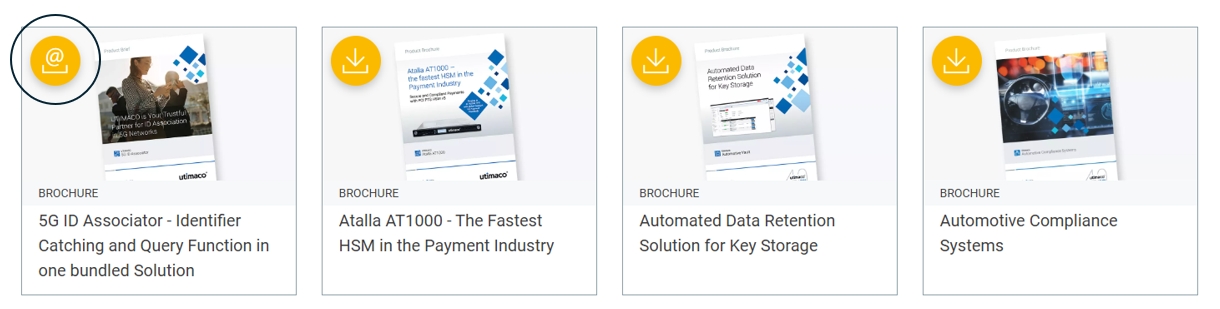
A click on such a button opens an online form which we kindly ask you to fill and submit. You can collect several downloads of this type and receive the links via e-mail by simply submitting one form for all of them. Your current collection is empty.