




Point-of-sale (POS) terminals are at the heart of in-store card payments. They capture payment information, support cardholder verification and exchange transaction messages with payment processors. According to the European Central Bank, approximately 25.7 million POS terminals were reported in the euro area at the end of 2025.
Keeping this infrastructure secure starts before a terminal processes its first transaction. One essential step is key injection: giving each device the cryptographic keys it needs to protect payments.
What is key injection, and why does it matter?
Key injection is the controlled process of loading cryptographic keys into secure payment devices, including POS terminals and ATMs. These keys support PIN encryption, transaction authentication and other security functions.
Consider a customer entering a PIN at checkout. The terminal uses a cryptographic key to encrypt the PIN data before it is sent for verification. Authorized systems must hold the appropriate keys to process that protected information securely.
Keys are usually provisioned before a device enters service and may need replacement during its operational life. The goal is to deliver the correct key to an authorized device without exposing sensitive key material.
That sounds straightforward. Doing it reliably across a large payment infrastructure is where the complexity begins.
Three key challenges
The payment companies usually face these three key challenges that key injection is solving.
- Security. Cryptographic keys are valuable targets. Interception, unauthorized access or substitution can compromise payment protection. Keys need safeguards throughout their lifecycle, from generation and distribution to replacement and retirement.
- Operational efficiency. Payment providers may manage thousands of terminals across locations and manufacturers. Shipping devices to secure facilities, coordinating loading sessions and tracking inventory can increase costs and delay deployments.
- Compliance. PCI PIN requirements define controls for key handling, secure cryptographic equipment and auditable operations. Organizations need more than strong encryption: they must demonstrate that security controls work.
Addressing all three challenges calls for a combination of secure technology and repeatable processes.
How can key injection be secured?
Hardware security modules (HSMs) provide a protected environment for generating and managing cryptographic keys. Depending on the device and architecture, keys can be loaded using symmetric key-encryption methods or public key infrastructure (PKI), where certificates help authenticate devices and establish trust.
Key blocks add protection when PIN-related symmetric keys are stored or transported encrypted under another symmetric key. ANSI X9.143-compliant key blocks cryptographically bind the protected key to its intended use, helping detect unauthorized changes.
Verification is equally important. Key check values (KCVs) help confirm the correct key was loaded; message authentication codes (MACs) can verify message integrity and authenticity; and certificate validation supports PKI-based authentication.
With these controls in place, organizations can choose how keys reach their devices.
Direct vs. remote key injection
There are two approaches to the key injection process; each has its own advantages.
- Direct key injection loads keys through a physical connection to an approved key-loading system, typically in a controlled facility. It provides direct device custody and oversight, but requires secure premises and device logistics.
- Remote key injection (RKI) delivers keys to supported devices over secure, authenticated network connections. It can shorten rollout times, reduce transport costs and simplify planned key changes across dispersed fleets.
Remote loading still requires an established basis of trust in the receiving device, authorized provisioning and monitoring. It changes the logistics, not the obligation to protect keys.
For organizations using different device models and both loading approaches, centralized management becomes especially valuable.
Bringing key management together with Utimaco KeyBRIDGE
Utimaco's KeyBRIDGE POI combines HSM-backed key protection with centralized storage, management and injection. Teams can coordinate provisioning through one interface across more than 400 supported POI device types.
Its remote key-loading capabilities help reduce dependence on traditional key injection facilities. This gives payment operators a more consistent way to manage keys across devices and locations, with less fragmented tooling and clearer operational oversight.
Introducing KeyBRIDGE 5100
Building on these capabilities, the new KeyBRIDGE 5100 introduces an updated security foundation while preserving familiar workflows.
Its embedded u.trust Anchor CSe HSM features active tamper-detection mechanisms designed to identify and respond to physical attacks. The platform targets FIPS 140-3 Level 4 and PCI PTS HSM certification; both certification processes are in progress.
Software updates are protected with hybrid classical and post-quantum digital signatures to help verify that updates are authentic and unmodified.
Key injection is more than a device setup task. It is fundamental to protecting payments throughout a terminal's operational life.
By combining strong key-handling controls, flexible loading methods and centralized management, organizations can improve security and operational efficiency while supporting compliance.
KeyBRIDGE 5100 builds on this approach, introducing enhanced hardware protection and preparing payment infrastructure for evolving cryptographic requirements.

¿Está preparado para asegurar su futuro digital?
Únase a las más de 500 empresas e instituciones gubernamentales de todo el mundo que confían en Utimaco para su infraestructura de seguridad crítica.
Contactar con VentasYour download request(s):

Your download request(s):
About Utimaco's Downloads
Visit our Downloads section and select from resources such as brochures, data sheets, white papers and much more. You can view and save almost all of them directly (by clicking the download button).
For some documents, your e-mail address needs to be verified. The button contains an e-mail icon.
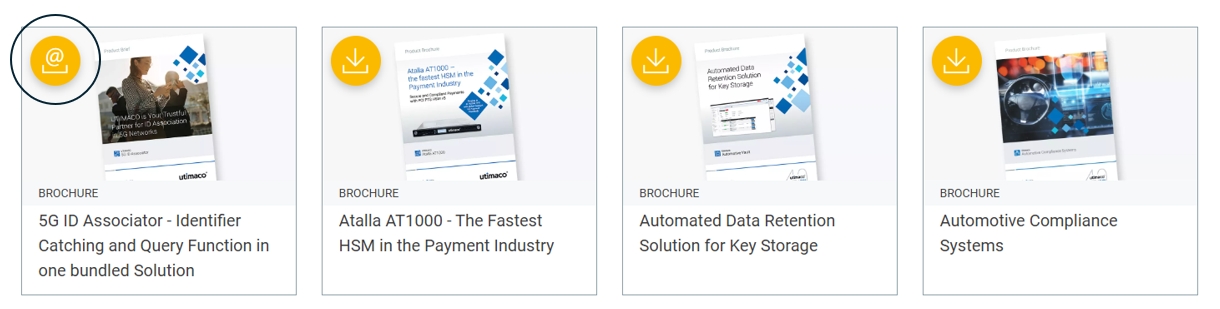
A click on such a button opens an online form which we kindly ask you to fill and submit. You can collect several downloads of this type and receive the links via e-mail by simply submitting one form for all of them. Your current collection is empty.