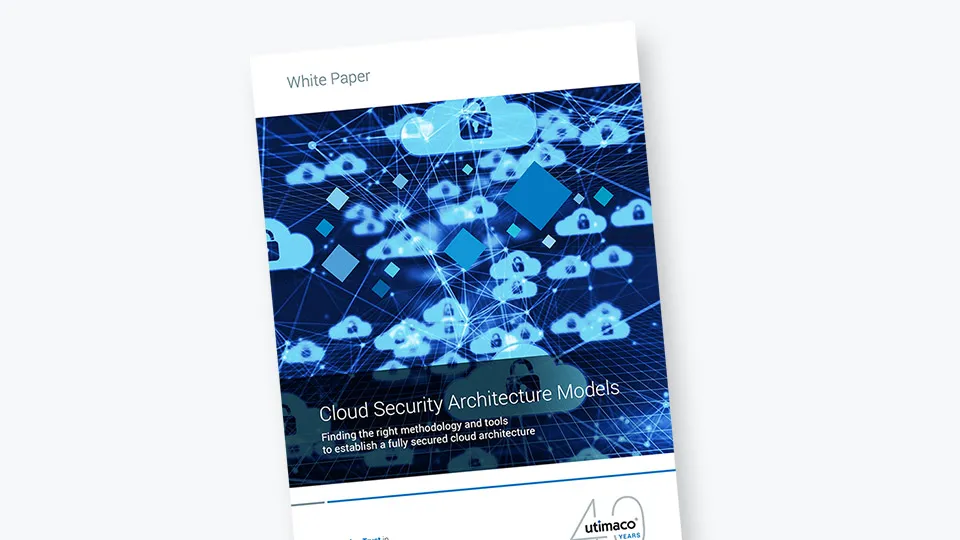
A propos du livre blanc
Mettre en place une architecture cloud entièrement sécurisée en fonction de vos besoins individuels
Découvrez la bonne méthodologie et les bons outils dans notre tout nouveau livre blanc
L'utilisation de l'informatique dématérialisée est une tendance lourde de la numérisation. Les organisations de tous les secteurs d'activité migrent vers le cloud. Cette évolution repose en grande partie sur les avantages exceptionnels qu'offre le nuage pour un large éventail de cas d'utilisation dans tous les secteurs d'activité. En outre, les technologies de l'informatique dématérialisée ont franchi une étape essentielle au cours des dernières années en termes de disponibilité technique, de facilité d'utilisation et de coûts.
Pour tirer pleinement parti des capacités des fournisseurs fournisseurs de services Cloud, une sécurité totale est essentielle. Pour profiter de la simplicité d'utilisation du cloud, il faut trouver un juste équilibre entre les mesures de sécurité et la facilité d'utilisation, en veillant à ce que les données et les services restent protégés sans compromettre le confort de l'utilisateur. Comme l'informatique dématérialisée n'est pas un lieu physique dont l'accès peut être contrôlé comme c'est le cas sur site, les infrastructures dématérialisées peuvent être très vulnérables aux attaques provenant de multiples vecteurs.
En s'appuyant sur les derniers développements en matière de cybersécurité, il est possible de rendre l'informatique en nuage aussi sûre que les installations sur site.
Téléchargez dès aujourd'hui notre livre blanc intitulé "Modèles d'architecture de sécurité pour l'informatique dématérialisée" afin d'utiliser tout le potentiel de l'informatique dématérialisée sans faire de compromis en matière de sécurité !
Nous vous donnons un aperçu complet de la sécurité des fournisseurs de services Cloud et des différents modèles d'architecture, y compris des explications utiles sur les termes et les technologies les plus importants.
Dans notre livre blanc, vous apprendrez
- Quelles sont les plus grandes tendances en matière d'utilisation de l'informatique dématérialisée
- Comment tirer parti de l'utilisation du nuage
- Quelles sont les menaces les plus graves découlant d'une sécurité insuffisante dans l'architecture en nuage ?
- Quels sont les termes et les méthodologies les plus importants dans le domaine de la sécurité des nuages ?
- Quels sont les éléments fondamentaux d'une architecture complète de sécurité de l'informatique dématérialisée?
- Quels sont les différents modèles d'architecture de sécurité de l'informatique dématérialisée et quand sont-ils les mieux adaptés ?
- Comment créer la base de votre propre architecture de sécurité dans les nuages - étape par étape
- Quelles sont les meilleures solutions pour mettre en œuvre votre propre architecture de sécurité Cloud?
- Et bien d'autres choses encore
Être informé est la première étape sur la voie de la réussite pour rendre votre installation basée sur l'informatique dématérialisée aussi sûre que celle sur site. Commencez dès aujourd'hui à vous informer sur l'architecture de sécurité de l'informatique dématérialisée !
Il est plus facile que vous ne le pensez de mettre en place un environnement entièrement sécurisé dans l'informatique dématérialisée.
Bénéficier de l'informatique dématérialisée sans compromettre la sécurité
L'informatique dématérialisée a franchi des étapes cruciales
Pour un large éventail de cas d'utilisation dans tous les secteurs, l'informatique dématérialisée offre des avantages exceptionnels. Il n'est donc pas surprenant que les entreprises de tous les secteurs migrent massivement vers le cloud, et cette tendance lourde devrait rester ininterrompue.
Le simple fait d'utiliser le nuage pour stocker et partager des fichiers est devenu un classique.
Aujourd'hui, il offre des possibilités sans précédent.
Au cours des dernières années, les technologies en nuage ont franchi une étape essentielle en termes de disponibilité technique, de facilité d'utilisation et de coûts, permettant ainsi de nouveaux modes d'utilisation.
L'utilisation de l'informatique dématérialisée pour rendre les fichiers accessibles à distance depuis n'importe quel endroit du monde est toujours d'actualité, mais ce n'est plus le seul cas d'utilisation.
En raison des progrès considérables de la technologie du nuage, le stockage ou l'hébergement d'applications et de services dans le nuage est l'une des grandes tendances. Cela permet aux organisations de réduire la complexité de leur infrastructure interne tout en facilitant l'accès à leurs clients et à leurs employés.
L'utilisation de l'informatique dématérialisée présente donc des avantages clés spécifiques pour les organisations, mais....
Le progrès technologique s'accompagne toujours de risques accrus
L'utilisation de l'informatique en nuage plutôt que de solutions sur site permet aux organisations de procéder à des ajustements rapides et faciles de leur infrastructure numérique. Mais chaque architecture en nuage doit être sécurisée de manière adéquate. La devise est la suivante : Une sécurité maximale sans compromis sur la facilité d'utilisation.
Il s'agit, entre autres, de
- Déploiement sécurisé de l'informatique en nuage et des services en nuage pour les cas d'utilisation commerciaux et non commerciaux
- Gestion fiable des identités et des accès dans le nuage
- Sécurité des données dans le Cloud
- Conformité avec les normes juridiques requises
Bénéficier des dernières tendances en matière d'utilisation de l'informatique dématérialisée peut facilement entraîner un manque de sécurité
Pour tirer pleinement parti des capacités des fournisseurs de services Cloud, une sécurité complète est essentielle.
Pour profiter de la simplicité d'utilisation du cloud, il faut trouver le bon équilibre entre les mesures de sécurité et la facilité d'utilisation, en veillant à ce que les données et les services restent protégés sans compromettre le confort de l'utilisateur.
Téléchargez dès aujourd'huinotre livre blanc intitulé "Modèles d'architecture de sécurité pour l'informatique dématérialisée" afin d'exploiter tout le potentiel de l'informatique dématérialisée sans compromettre la sécurité !
Apprendre à savoir comment stocker, accéder et utiliser les données dans le Cloud en toute sécurité
L'utilisation des données reste le premier cas d'utilisation de l'informatique dématérialisée
Les entreprises de tous les secteurs d'activité ressentent l'urgence de migrer vers l'informatique dématérialisée. D'ici un à deux ans, environ 70 % des charges de travail seront dans le nuage. Le traitement, l'utilisation et le stockage des données, quels qu'ils soient, en constituent la majeure partie.
Le progrès technologique s'accompagne toujours de risques accrus
En raison des énormes progrès réalisés ces dernières années dans le domaine des technologies en nuage, le nuage est une pierre angulaire essentielle des infrastructures numériques des organisations dans le monde entier et dans chaque secteur d'activité.
Le stockage, l'accès et l'utilisation des données dans le nuage restent l'un des principaux cas d'utilisation partiellement ou totalement transférés vers le nuage.
Les avantages sont évidents... mais qu'en est-il de la sécurité des données ?
Traitez vos données comme les joyaux de votre couronne
L'utilisation de mots de passe pour protéger l'accès aux données stockées dans le nuage date des années 2000 et ne résiste pas aux menaces d'aujourd'hui.
Considérez toujours vos données comme vos actifs les plus importants. Une fois qu'elles tombent entre de mauvaises mains, elles ne peuvent plus jamais être récupérées.
Les rançongiciels et l'espionnage industriel ne sont que la partie émergée de l'iceberg. De même, la perte accidentelle de données et l'utilisation abusive en interne peuvent causer des dommages considérables à vos données, à votre entreprise et à votre réputation.
Assurez-vous que vos données sont entièrement protégées dans l'informatique dématérialisée
Il est essentiel d'éviter les menaces qui pèsent sur vos données et de les protéger de manière fiable, tout en respectant les normes de conformité et de sécurité requises. En même temps, il est important de gérer cela facilement, sans ralentir vos opérations.
Avec les bonnes solutions de cybersécurité, c'est chose aisée. Même pour les organisations très réglementées telles que les gouvernements et les services publics, la migration de leurs données et de leurs charges de travail vers l'informatique dématérialisée est en train de devenir la norme.
Téléchargez dès aujourd'huinotre livre blanc intitulé "Modèles d'architecture de sécurité dans le nuage" afin d'utiliser tout le potentiel du nuage sans compromettre la sécurité !
Découvrez des stratégies efficaces pour réduire de manière significative votre coût total de possession en utilisant le cloud
La réduction du coût total de possession est l'un des principaux facteurs d'accélération de l'adoption de l'informatique dématérialisée
Compte tenu des avantages exceptionnels qu'offre le cloud dans un large éventail de cas d'utilisation, les organisations de tous les secteurs ressentent un sentiment d'urgence à migrer vers le cloud.
En raison des progrès considérables que les technologies du nuage ont réalisés ces dernières années, le nuage est aujourd'hui une pierre angulaire essentielle des infrastructures numériques pour les organisations.
La protection des données est incontestablement le premier cas d'utilisation de l'informatique dématérialisée. La voie à suivre pour parvenir à une sécurité totale des données d'une organisation varie en fonction des besoins individuels et peut différer pour chaque configuration. Les variations vont de l'utilisation de l'informatique dématérialisée comme solution de sauvegarde à la migration complète de toutes les applications et données vers l'informatique dématérialisée.
L'avantage primordial partagé par toutes les stratégies d'informatique dématérialisée est la réduction substantielle du coût total de possession (TCO) : La réduction substantielle du coût total de possession (TCO).
Réduction du coût total de possession grâce à l'informatique dématérialisée
L'utilisation de l'informatique dématérialisée pour la migration des données et des charges de travail offre un énorme potentiel aux entreprises, quelle que soit l'architecture dématérialisée choisie.
Si l'on considère les coûts, l'utilisation de l'informatique dématérialisée devient la stratégie centrale pour réduire les coûts.
Comment l'informatique dématérialisée peut réduire de manière significative votre coût total de possession :
- Réduction des coûts associés aux solutions sur site, tels que le matériel et les installations
- Optimisation des dépenses de personnel :
- L'externalisation des charges de travail vers le nuage libère les organisations de l'obligation de payer des experts hautement qualifiés
- Collaboration à distance entre les équipes de travail et les équipes de projet composées de membres internes et externes
- Augmentation et réduction flexibles de la capacité de stockage des données en fonction des besoins sur la base d'une plus grande évolutivité sans empiler votre environnement sur site
- Une reprise après sinistre plus facile par rapport aux scénarios de charge de travail sur site
Les avantages en termes de coûts sont évidents. Mais pour bénéficier de coûts réduits ET garantir la protection des données et des services sans compromettre le confort des utilisateurs, il faut des mesures de sécurité efficaces.
Assurez la réussite de votre projet d'informatique dématérialisée en choisissant le modèle d'architecture de sécurité approprié
Commencez dès aujourd'hui votre voyage dans l'informatique dématérialisée et profitez de tous les avantages qui s'offrent à vous.
En choisissant la bonne méthodologie et les bons outils, vous pouvez rendre le cloud, ainsi que les données, les applications et les services stockés ou hébergés dans le cloud, aussi sûrs que sur site. Simultanément, vous optimisez considérablement votre coût total de possession.
Cette tâche est simplifiée avec le bon modèle d'architecture de sécurité Cloud. Même pour les organisations très réglementées telles que les gouvernements et les services publics, la migration des données et des charges de travail vers l'informatique dématérialisée devient la norme.
Découvrez comment optimiser votre coût total de possession tout en garantissant une protection solide des données dans le nuage, contre les accès internes et externes non autorisés.
Téléchargez dès aujourd'huinotre livre blanc "Modèles d'architecture de sécurité dans le nuage" afin d'utiliser tout le potentiel du nuage sans compromettre la sécurité !